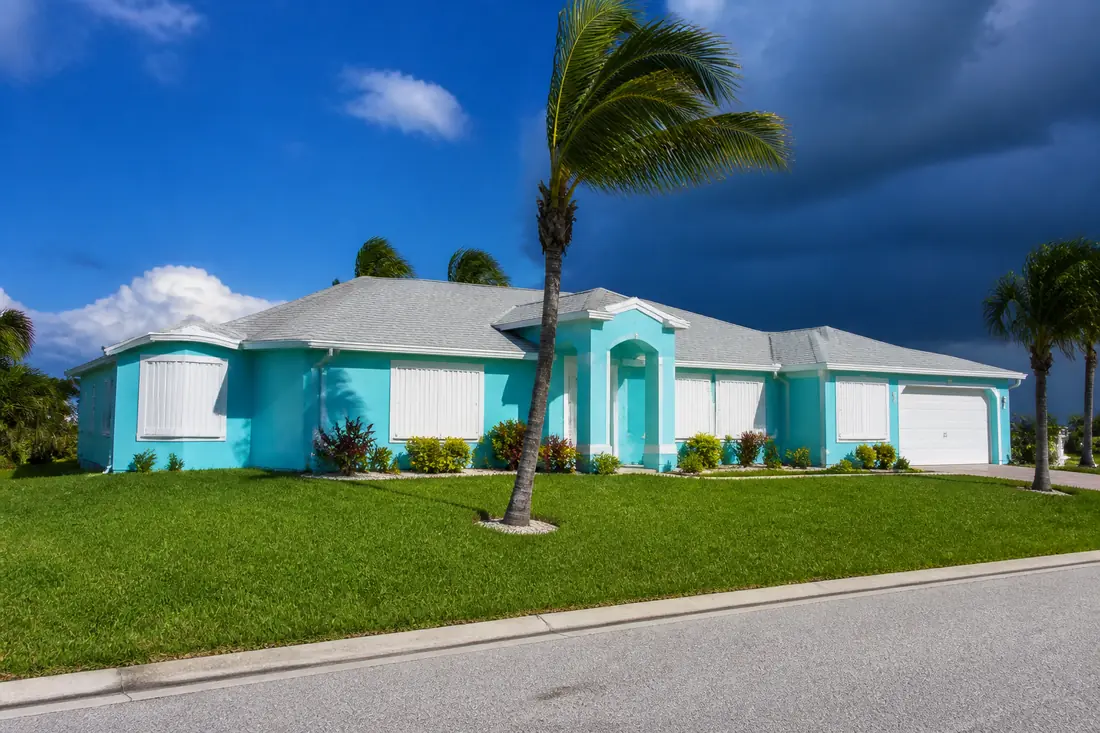
Every quote for hurricane shutters carries an unspoken promise: that this is what stands between your house and the next storm.
For one hazard, that is true. For the hazard that did most of the damage in Lee County the last time a major hurricane came ashore here, it is not true at all — and a company that will not tell you which is which is not worth buying from.
Opening protection is worth having. It is also worth understanding, because the storm that shaped this county’s building stock is unusually well documented, and what the record shows is not quite the story the marketing tells.
Last reviewed: 8 September 2026 against the National Hurricane Center’s Tropical Cyclone Report for Hurricane Ian (AL092022) and the Florida Building Code, Building volume, 8th Edition (2023).
What the record actually says about Ian
Ian reached a peak intensity of 140 knots — a category 5 hurricane — at 1200 UTC on 28 September 2022. It weakened slightly before making landfall on Cayo Costa at 1905 UTC with an intensity of 130 knots, then came ashore a second time near Punta Gorda an hour and a half later at 125 knots.
Those are the headline numbers. Here is the one that matters more for a house inland of the water.
The highest sustained wind actually measured on land near the landfall came from a mobile meteorological tower placed by the Florida Coastal Monitoring Program near the Punta Gorda airport. It recorded peak sustained winds of 78 knots with a gust of 96 knots.
That is a serious wind. It is also well below the landfall intensity, and the reason is that the strongest winds were never over the instruments. Ian’s eyewall was wide — the report describes a radius of maximum wind greater than 30 nautical miles when correcting the aircraft data behind the 130-knot landfall estimate, and cites a 20-nautical-mile RMW at landfall in its discussion of why the surge was so destructive. Either way it was a large storm, much of that eyewall sat over water, and instruments in the worst of it did not survive to report.
Meanwhile, the damage figures for the county are staggering. In Lee County, at least 52,514 structures were impacted, of which 5,369 were destroyed and 14,245 received major damage. In Fort Myers Beach alone, an estimated 900 structures were totally destroyed and 2,200 damaged.
So: measured winds substantially below the category number, and tens of thousands of buildings wrecked. The gap between those two facts is the whole subject of this article.
The gap is water
Storm surge was the deadliest hazard of the storm, claiming 41 lives — and 36 of those 41 surge fatalities occurred in Lee County. Four direct deaths across the entire storm were attributed to wind.
The inundation numbers follow the same shape. Peak surge reached 10 to 15 feet above ground level in Fort Myers Beach. On the eastern portion of Sanibel Island, maximum inundation ran 9 to 13 feet above ground level, and a USGS water level sensor measured 12.58 feet above mean higher high water. Surveyors found the highest marks around 15 feet above MHHW inside the second story of beachfront structures.
Closer in, maximum inundation levels of 6 to 9 feet above ground level occurred in Pine Island, Cape Coral and other communities along the mouth of the Caloosahatchee River. A USGS sensor at Punta Rassa, at the east end of the Sanibel Causeway, measured 8.37 feet above MHHW. Two further sensors, in Matlacha and Cape Coral, were lost or destroyed.
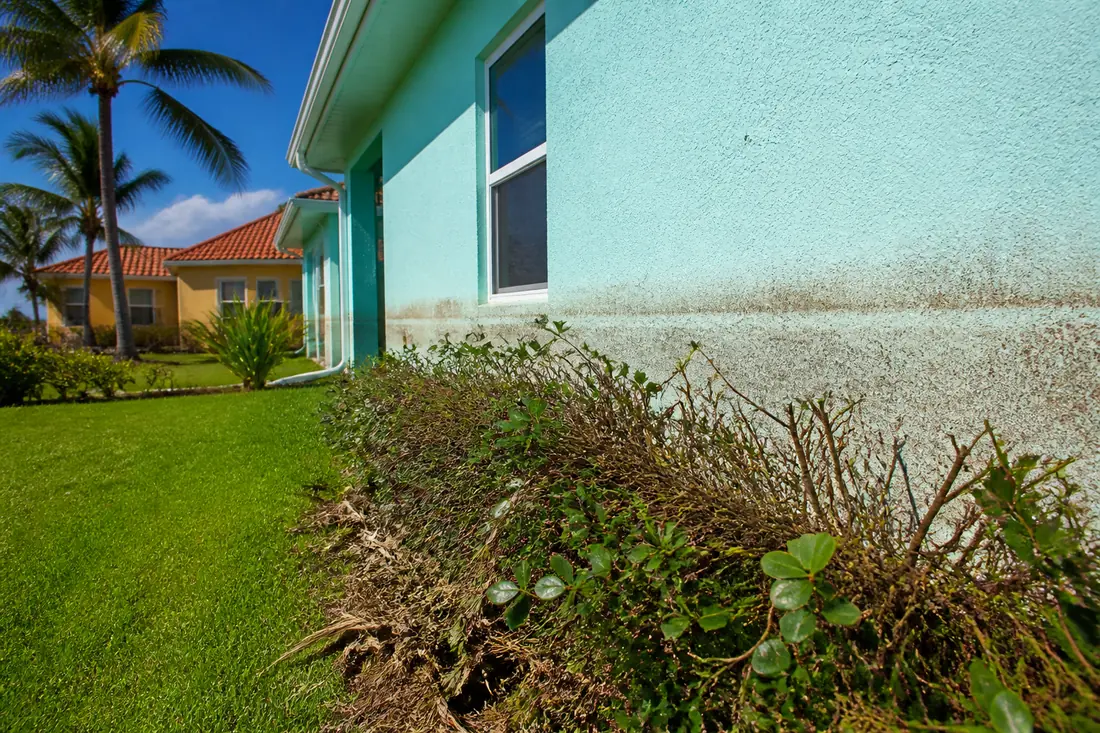
A shutter does nothing about any of that. Hurricane shutters are not designed or rated to resist hydrostatic water loads, and they will not stop floodwater entering through walls, doors or foundations. Anyone who implies otherwise is selling something.
So why fit them at all
Because the two hazards do not overlap as much as the headline suggests, and because the wind hazard is the one you can do something about at reasonable cost.
Surge is a function of elevation and distance from open water. It is addressed — where it can be addressed — by elevation, flood venting, construction type and flood insurance, and for a great deal of Lee County housing it is simply not the governing risk. A house on the Lehigh Acres grid, or well up a Cape Coral canal system, is exposed to wind and flying debris far more than to a 12-foot surge.
For those houses, and for the parts of a waterfront house above the surge line, opening protection does something specific and valuable: it keeps the building envelope closed.
That is the mechanism worth understanding. When an opening fails in high wind, the building is pressurized internally. The pressure has to go somewhere, and it typically goes upward and outward — which is why a house that loses a window on the windward side can lose roof structure that had nothing wrong with it. The window was not the loss. It was the start of the loss.
The Code offers two ways to satisfy this
Section 1609.1.2 of the Florida Building Code requires that in wind-borne debris regions, glazed openings be impact resistant or protected with an impact-resistant covering.
That word or is the reason this site exists. New impact glazing and a rated shutter over a sound window satisfy the same requirement. Where the windows are at the end of their life, replacing them addresses both problems at once. Where the windows are sound, protection is usually the far cheaper route to the same code position, and the money saved is not a compromise on safety.
The section names the standards a rated product meets — TAS 201, 202 and 203, AAMA 506, ASTM E1996 and ASTM E1886, with ANSI/DASMA 115 for garage and rolling doors. A quote that says “hurricane rated” without naming one of those has told you nothing checkable.
What a professional looks at, in order
- Where the house sits relative to the water, because that decides whether surge or wind is the governing hazard, and therefore whether shutters are the main event or one part of a larger problem.
- Which openings actually matter. The large rear slider and the garage door are usually the biggest and most consequential. A house with every window protected and an unbraced garage door has spent money in the wrong order.
- Who is going to deploy it. This decides the system more than price does.
- The span of each opening, since rated systems are approved across a maximum width and a wide lanai run constrains what is available.
- The mounting substrate, because the anchors carry the load and a shutter is only as good as what its track is fixed to.
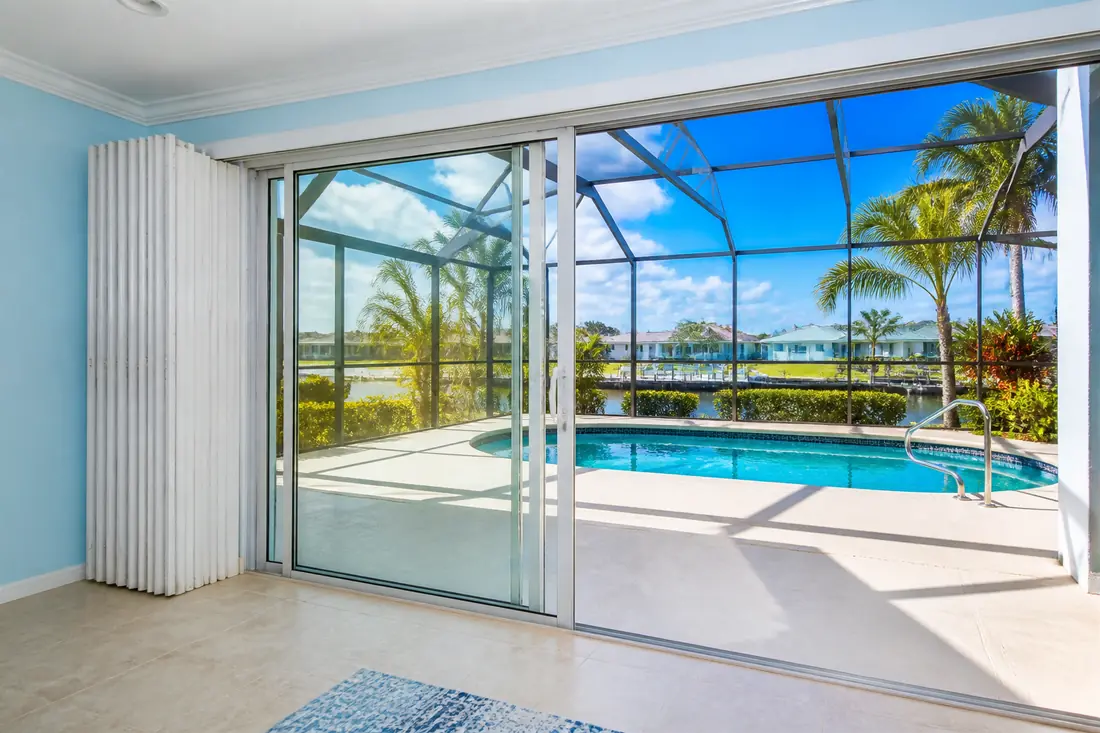
Which system, and the question that decides it
There is no best system. There is a system that fits how the house is used.
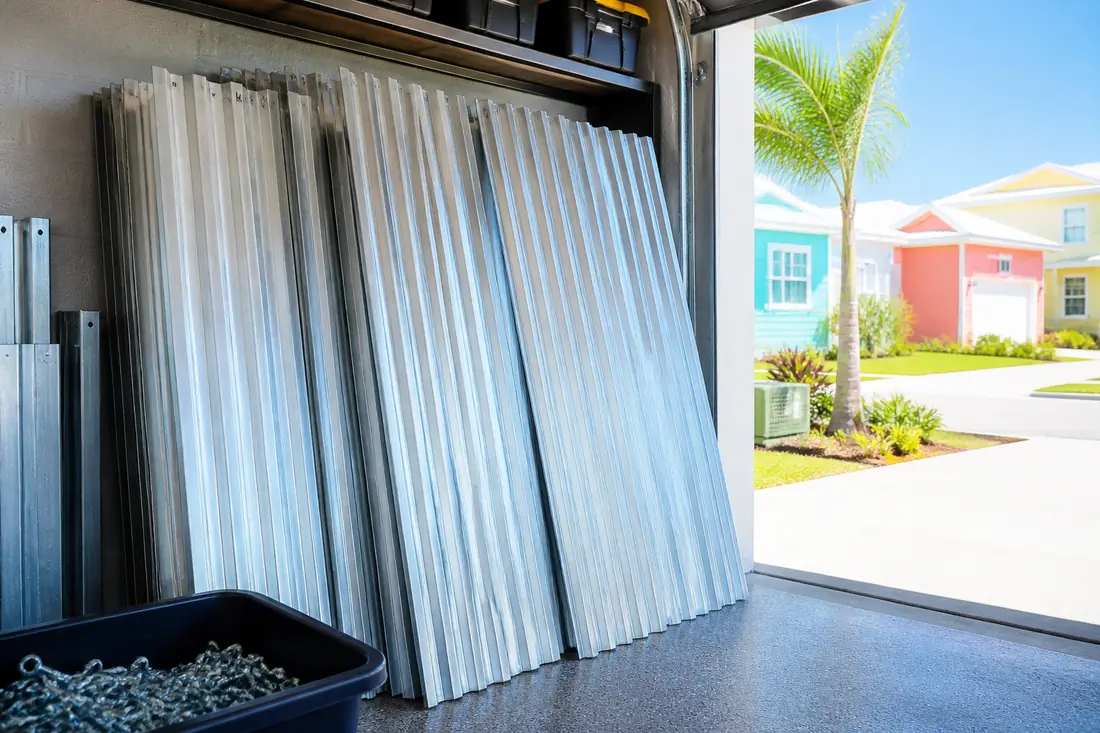
Panels are the least expensive rated protection and the most work to use. They bolt to permanent anchors, they need storage, and they need somebody present with enough warning and the physical ability to fit them. For a year-round household with a few openings, they are excellent value.
Accordion shutters stay on the building and draw closed from the sides with no ladder and nothing to carry. They are usually the least expensive whole-house route to permanent protection, and they are visible all year, which is the main objection to them.
Roll-down shutters are close to invisible when not deployed and can be motorized, so a whole house closes from indoors. They cost more, and a motorized system needs a manual override — outages and storms arrive together.
Bahama and colonial shutters add year-round shade and are the only category people choose partly because they like how they look. Rated versions exist; so do decorative ones carrying no approval at all, and the difference is invisible from the street.
The question that settles it is not which is strongest. All rated systems meet the same code requirement. It is whether the system will actually be closed when it matters. A property empty for half the year rules out anything needing a person on site, whatever the price difference says.
What drives the cost
No honest single figure exists without knowing the number of openings, their spans, and the property. What moves it:
- Span. Wide lanai runs and large sliders are the expensive openings, and sometimes need an intermediate support to reach the required pressure at all.
- Permanent versus removable. Anything that stays on the building costs more than panels and asks nothing of you later.
- Motorization, and whether battery backup is included.
- Substrate condition. Deteriorated block or a failed buck is made good before a track is anchored to it.
- Jurisdiction. Cape Coral, Fort Myers, Bonita Springs, Sanibel and Fort Myers Beach each permit their own work; unincorporated Lee goes to the county, and the document requirements differ.
Common mistakes
Buying against the wrong hazard. A waterfront ground floor that floods to eight feet has a surge problem that shutters do not touch. Establish which hazard governs before deciding what to spend.
Leaving the garage door. The widest opening in most houses, frequently the only unprotected one, and the failure that pressurizes the whole building.
Choosing a system nobody will deploy. Panels bought on price and never fitted protect nothing. This is a common and costly mistake.
Assuming decorative shutters count. Louvered shutters screwed flat beside a window, many of which cannot close, carry no approval and will not be treated as protection at a permit or a mitigation inspection.
Never test-fitting. A panel that has never been offered up to its opening is an assumption, not a plan. Fit every one once, in daylight, and label them.
Help with the cost
The My Safe Florida Home program, run through the Florida Department of Financial Services, provides free wind mitigation home inspections and, for eligible homeowners, matching grants toward hurricane retrofit work including opening protection. The program’s own FAQ records the current round as $184.9 million allocated for grants — 18,490 grants — and $3.5 million for initial and final home inspections, with $550,732 set aside for new applicants’ initial inspections, providing 3,442 of them.
The sequence matters: an initial inspection by an authorized inspector determines which improvements are recommended, and a final inspection documents what was completed. Funding rounds open and close, and eligibility has changed between cycles, so the program site is the place to confirm current status rather than any contractor. Applications are made by the homeowner directly.
Before you buy
Find out what governs your property first. If the ground floor is in a surge zone, that is a different and larger conversation than shutters, and a company that goes straight to a shutter quote without asking has not looked at your house.
If wind and debris are the governing hazard — which for most of inland Lee County they are — then work in this order: establish the required pressure at each opening, protect the largest and most exposed first, include the garage door, and choose the system on who will close it rather than on the price per opening.
And ask for the approval number. Not the brand, not the phrase “hurricane rated” — the approval that covers that product at that span. It is the one question that separates a quote you can check from one you cannot.
This guide explains the Code and the published storm record in plain language and is not legal or engineering advice. Your jurisdiction’s determination for a specific property controls what is actually required.
Sources
- National Hurricane Center, Tropical Cyclone Report: Hurricane Ian (AL092022) — landfall intensities and times, the 140-knot peak, the 78-knot sustained / 96-knot gust measurement from the Florida Coastal Monitoring Program tower near Punta Gorda airport, the 20-nautical-mile radius of maximum winds, Lee County structure damage counts, the surge fatality split, and the USGS inundation measurements at Punta Rassa, Sanibel, Pine Island and Cape Coral.
- Florida Building Code, Building, 8th Edition (2023), Chapter 16 — Structural Design — Section 1609.1.2, the impact-resistant-or-protected requirement and the standards it names.
- My Safe Florida Home — Program FAQ — the current round’s allocation between grants and inspections, and the initial and final inspection definitions. Note that the page is largely client-rendered; the figures cited here were read from the served source on 8 September 2026.