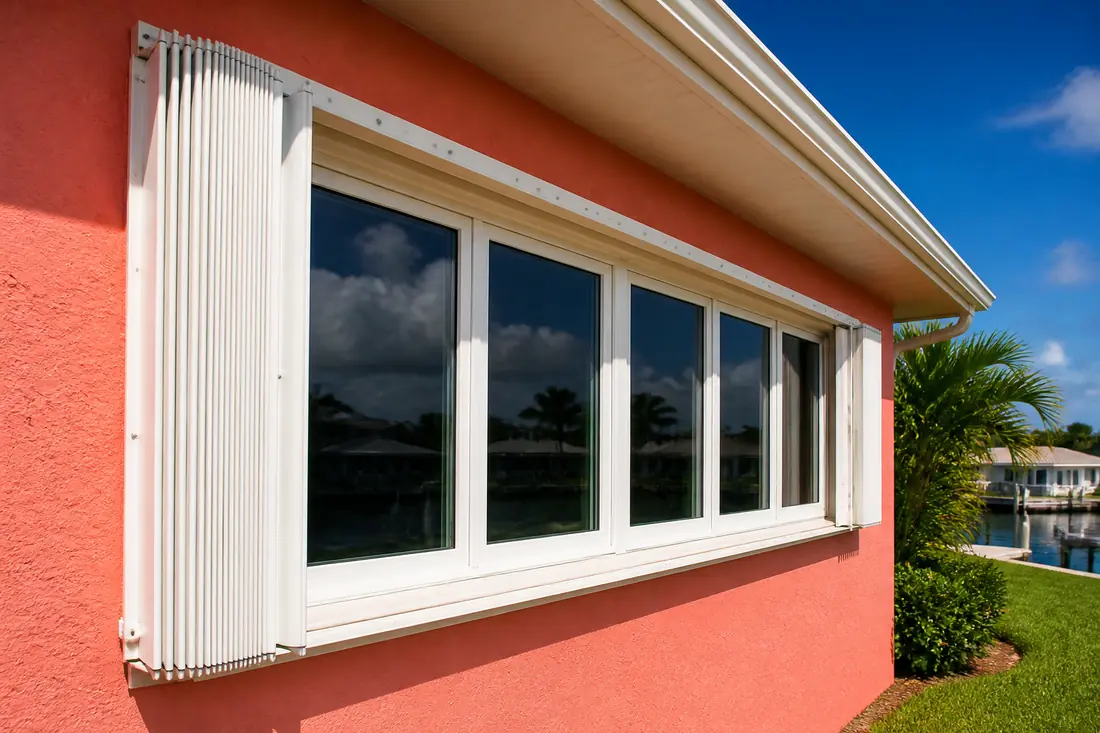
Somewhere in most Cape Coral houses that have had storm protection fitted there is a folder. It holds a permit card, a Notice of Commencement, a one-page warranty, and a number beginning with the letters FL. The number is the Florida product approval, and the folder usually gets filed on the assumption that it settles the question of whether the work was done properly.
It does not settle it. It is closer to the opposite: the number is a pointer to a document that says, in a level of detail most people never see, exactly how that product was supposed to be fastened to the house. Anchor type. Anchor grade. How deep into the substrate it had to go. How far from the edge of the concrete it had to stay. How far apart they had to be. There are even required diagrams.
The question that brings people to this is rarely academic. It comes up when a wind mitigation inspector asks for documentation that was never handed over, when a claim turns on whether an opening was protected the way the rating assumed, or when a buyer’s inspector looks at a shutter track and asks who picked the fasteners. Hurricane Ian, in September 2022, left a great deal of opening protection in Lee County fitted in a hurry, and the paperwork trail is thinner in some of it than the installation was.
What follows is what Florida’s rules actually require of that paperwork, where to find the parts of it fixed to your own house, and the one condition attached to the protection an older installation enjoys when the code changes. That condition is the part that gets left out of the summaries, and it is the reason the anchor schedule matters years after the job is finished.
A Florida product approval is both a product and a method of attachment
Statewide product approval runs on authority given by Section 553.842 of the Florida Statutes and is administered through Chapter 61G20-3 of the Florida Administrative Code. A product is evaluated, that evaluation is validated, and the Florida Building Commission approves the result.
The evaluation stage is where attachment enters. Rule 61G20-3.005(4) lists what every evaluation report and test report has to contain, and paragraph (e) is titled Installation requirements. Its first sentence sets out who is allowed to write them: installation instructions including attachments “shall be developed by an evaluation entity, test lab or by the manufacturer’s licensed design professional.”
Read that for who is missing from it. The installer is not on the list. Neither is the general contractor, nor the homeowner, nor the supplier who sold the units. The method of attachment is authored upstream of the person holding the drill, and it arrives at the job as an instruction rather than a suggestion.
What the instructions have to name, at minimum
Rule 61G20-3.005(4)(e) then carries an exception written specifically for windows, and the same exception appears again at 61G20-3.005(5)(e) for products approved on a certification mark or listing. Installation instructions for windows including attachment, at minimum, must include:
- “Type, and grade of anchor, and/or manufacturer’s anchor specifications, including minimum nominal size, minimum penetration into substrate and minimum edge distances”
- “Type, physical dimensions, material and grade of any accessory item or strap, if applicable”
- “Spacing of anchors, shims, accessory items and straps”
- “Illustrated diagrams of the attachment of the product to the structure”
Each of those four exists because leaving it out would let a compliant-looking installation differ from the one that was tested.
Type and grade is not a formality. A masonry screw and a sleeve anchor of the same nominal diameter transfer load into concrete by different mechanisms, and a test that qualified one did not qualify the other. Minimum nominal size is the diameter the test used. Minimum penetration into substrate is a different figure from the length of the fastener, and the difference is everything that fastener passes through before it reaches concrete: stucco, a gap, a shim stack, a wood buck. A long screw and a shallow embedment are compatible conditions.
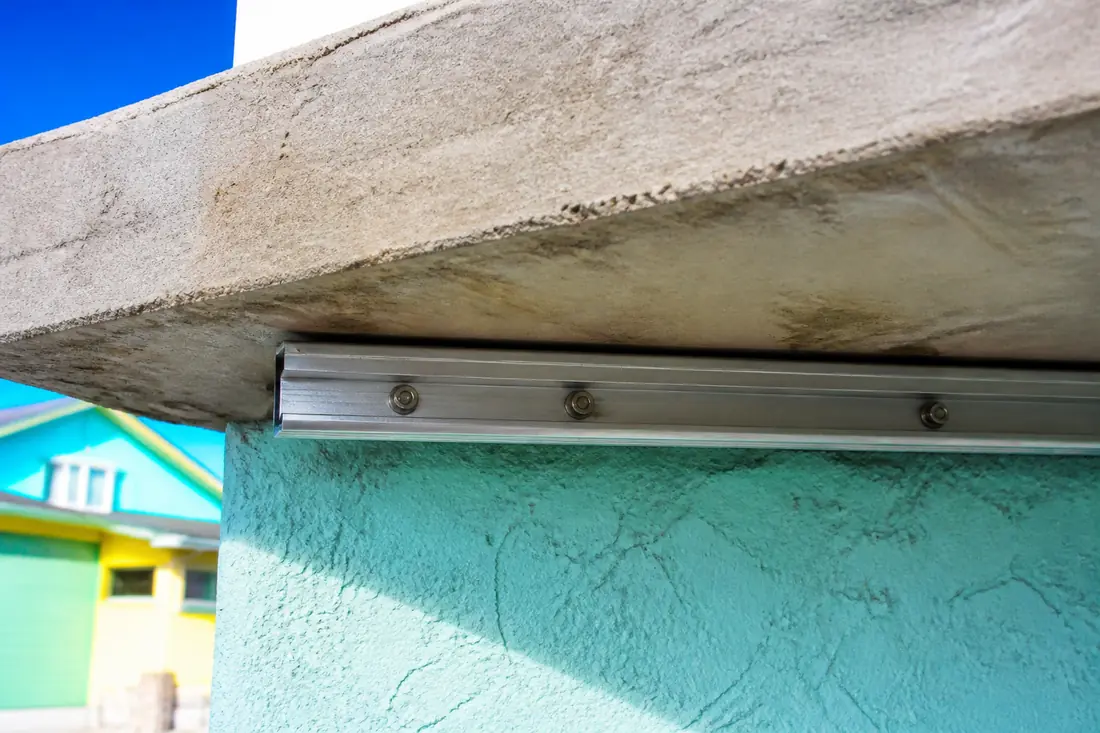
Minimum edge distances are the hardest of the four to put right after the fact. An anchor set nearer the edge of a tie beam or a block cell than the instructions allow is anchored in less material than the tested assembly had, and the correction is usually a new hole in a position that may or may not exist. It is also invisible once a track is in place and a bead of sealant has gone around it.
Spacing covers anchors, shims, accessory items and straps together, which is the clue to how the rule thinks about an installation. The fastener is not the system. The shim that sets the frame off the jamb is part of the load path, and the spacing of shims is specified alongside the spacing of anchors for that reason.
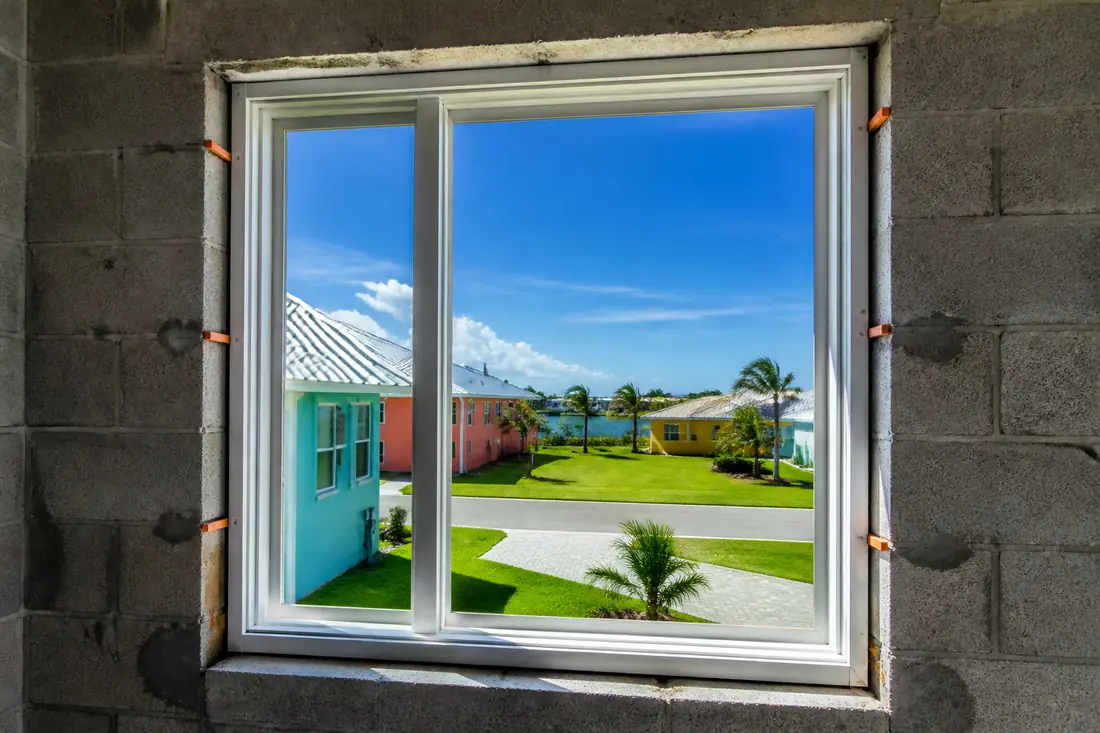
This exception is not a recent addition. The Notes to Rule 61G20-3.005 record it as new in 2002 and last amended in 2008, which means any window installed in Cape Coral in the past fifteen years was fitted under a rule that already specified what its anchor instructions had to say.
Shutters sit under the same rule, with one difference
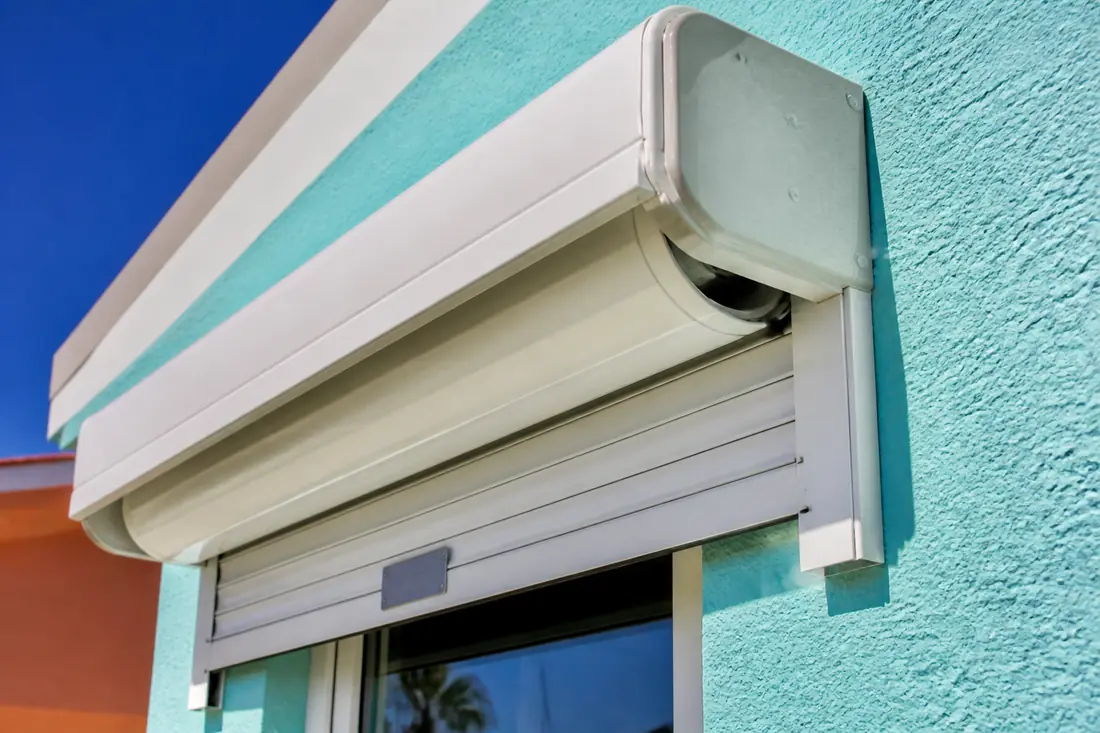
Rule 61G20-3 governs opening protection as much as it governs windows. Accordions, roll-downs, panels and fabric screens all reach a Florida approval through the same evaluation and validation route, and the documentation requirements of Rule 61G20-3.005(4) apply to them in the same way.
The difference is the four-item list above. Its wording is an exception written specifically for “installation instructions for windows,” so the minimum content it prescribes is a window rule rather than a shutter rule. A shutter approval’s instructions are still required by Rule 61G20-3.005(4)(e) and still have to be developed by an evaluation entity, a test lab or the manufacturer’s licensed design professional. What they must contain at minimum is not spelled out in the same detail.
In practice that is a reason to read a shutter’s instructions rather than assume them. The document exists and is binding; the rule simply does not guarantee it will itemize edge distance and embedment the way a window’s has to.
Limitations and conditions of use
One more item on the Rule 61G20-3.005(4) list deserves its own mention, because it decides more arguments on site than the anchor schedule does. Paragraph (f) requires every evaluation or test report to state the product’s “limitations and conditions of use.”
That is the field describing what the approval does not cover: configurations, maximum sizes, substrates, design pressures and exposures outside the approved range. An installation can follow the anchor schedule exactly and still fall outside the approval because the unit is larger than the approved configuration or the wall is not a substrate the approval contemplates. When an inspector, an underwriter or an engineer says a product is “not approved for that,” this is almost invariably the field being pointed at, and it is published alongside the installation instructions on the Building Codes Information System.
Who writes the instructions, and who checks them
An anchor schedule written by the company selling the product would be worth less if nobody looked at it. Two separate provisions exist so that somebody does.
Rule 61G20-3.005(6) and (7) both deal with the moment before installation instructions become public. Prior to posting installation instructions, including anchorage requirements, on the Building Codes Information System at floridabuilding.org, they “shall be reviewed or verified.” Under subsection (6), which applies to the evaluation report route, the reviewer may be the evaluation entity, the test lab, the architect or engineer of record, or a manufacturer’s licensed design professional. Under subsection (7), which applies to the certification route, it is the certification agency or a manufacturer’s licensed design professional.
Then Rule 61G20-3.006 adds a second filter, and the trigger for it is independence. Subsection (2)(c) covers Technical Validation of installation instructions including attachments: where those instructions were developed by an entity that is “not an independent third-party from the manufacturer,” an approved validation entity has to determine that the evaluator complied with acceptable standards of engineering principles, verify that the evaluation complies with the Code, and file a copy of the application with the Commission. The exception is narrow and specific: technical validation is not required where the installation instructions have been verified by the product certification agency or the product evaluation entity.
The structure is not complicated once the logic is visible. The closer the author of the anchor schedule sits to the company selling the product, the more independent checking the rule requires before that schedule can be relied on.
Rule 61G20-3.006(4) backs it with penalties on the validators themselves. A validator who misrepresents accreditations or other material information on an application faces a minimum of a $5,000 fine and revocation and a maximum of $10,000 and revocation. Validating outside the scope of accreditation carries the same range. Verifying or certifying by fraud, deceit or untrue representation on the validation checklist runs from a $5,000 fine, probation or suspension up to $10,000 and revocation.
An approval is not permanent, and that cuts both ways
Rule 61G20-3.007(1)(e) sets out how long an approval lasts. It is valid until the product changes in a way that decreases its performance, or the standards or provisions of the Code affecting the product change, or the approval is suspended, revoked or superseded by a Commission-approved revision.
So a code cycle can end an approval for new work. The same paragraph then protects work already done, and the wording of the protection is the thing to read closely:
Changes to the Code shall not be construed as voiding the approval of products previously installed in existing buildings provided such products met building code requirements at the time the product was installed.
The grandfather clause is conditional. Shutters fitted in 2014 do not become non-compliant because the code moved in 2017 or 2023 — provided they met the requirements that applied in 2014. An installation that departed from its anchor schedule on the day it went in never acquired the status that later gets protected. There is nothing for the clause to preserve.
That is why an anchor schedule is not finished business once the final inspection passes, and it is the practical answer to a question people ask in good faith: whether old protection is “still legal.” The code change is not what decides it.
Two further obligations sit on the manufacturer and are worth knowing because they can move under an owner who is doing nothing. Rule 61G20-3.007(1)(g) requires the manufacturer to notify the Commission if it makes changes to a product that decrease performance. Rule 61G20-3.007(1)(h) requires notification when the quality assurance requirements of Rule 61G20-3.005(3) are no longer in place — and 61G20-3.005(3) is the rule that products in the approval categories “shall be manufactured under a quality assurance program audited by an approved quality assurance entity.” An approval can therefore go stale for reasons that have nothing to do with how the product performs in a wind tunnel.
Where a new code edition does not require a material or substantive change, Rule 61G20-3.007(1)(f) lets the manufacturer affirm that the approved product meets the new edition, with a statement from an approved evaluation or validation entity where the evaluation report still refers to the previous edition. The fee for that affirmation is $100 under Rule 61G20-3.007(2)(f). A product approval that has not been affirmed across a code edition is not the same thing as one that has.
The fee schedule in Rule 61G20-3.007(2) shows what the Commission expects to happen to an approval over its life. Approval costs $500 per subcategory of product. A revision that materially changes a product’s performance or design specification is another $500. An editorial revision that does not materially change performance is $150, and affirmation across a new code edition is $100.
The rule anticipates revision, in other words, and it prices it separately from first approval. So the practical move is to identify the approval record your installation was actually built to, rather than reading the current version on a manufacturer’s website and assuming it describes what is on your wall.
What a professional looks at, in order
Someone evaluating an existing installation rather than selling a new one tends to work from the outside in, because that is the order in which evidence disappears.
The product’s own label first, because it carries the approval holder and usually the approval number, and that number is what everything else gets looked up against.
Then the approval record itself on the Building Codes Information System: the configuration, the design pressures, and the limitations and conditions of use — then the installation instructions, which is the document the anchor schedule lives in.
Then the substrate, because the instructions almost certainly give different anchors and different embedments for poured concrete, hollow block, filled block and wood framing, and the wall is whatever it is regardless of what was assumed.
Then what is reachable: anchor spacing along a track, how close the end anchors sit to a corner or an arris, whether shims are present where the instructions call for them, whether the accessory items and straps match the types named.
Then the gaps in the record — whether instructions were on site, whether the permit was finaled, whether any component was substituted and on whose authority.
Nothing in that sequence requires a destructive opening, and most of it is a reading exercise rather than an engineering one. Embedment depth is the exception. It is the figure that cannot be seen from outside, which is also why it is the one worth having documented rather than inferred.
What drives the cost of getting this right
There is no meaningful single price for bringing an installation back to its approval, because the work is set by what the inspection finds and by the house. The variables that move it most:
- Substrate, and whether the available anchor for it needs a larger edge distance than the existing holes allow
- Whether the original anchor schedule can be obtained at all, which depends on the product still being listed and the approval still being current
- The condition of the existing buck or sub-frame, which may be carrying the load path the instructions assumed
- Whether a site-specific engineering evaluation is needed because the as-built condition is outside anything the instructions cover. That is a professional fee and belongs in a quote as a line item
- Access, which on a second story or a screened lanai return is a real cost rather than an afterthought
A quote that prices the hardware and not the diagnosis has priced a different job from the one being asked for.
Five mistakes that cost money later
Treating the FL number as the answer. The number identifies an approval. It says nothing about whether this installation matches it, which is the question an inspector, an underwriter and a buyer all eventually ask.
Letting the fastener be chosen on site. It is the most natural thing in the world for a crew to reach for what works in that wall. Rule 61G20-3.005(4)(e) puts that choice upstream of them, with the people who developed and tested the attachment.
Not asking for the instructions on the day. They are a published document, reviewed under Rule 61G20-3.005(6) or (7) before posting, and the cheapest moment to get a copy is while the installer is standing in the driveway with it.
Reading the anchor schedule and skipping the limitations. Rule 61G20-3.005(4)(f) is the paragraph that says what the approval does not cover, and a correctly anchored unit outside its approved configuration is still outside its approval.
Assuming a code change broke the approval, or that age protects a bad install. Rule 61G20-3.007(1)(e) answers both, in the same sentence, and the answer turns on whether the product met the requirements in force when it was installed.
Before you buy
Five questions, each of which has a document behind it:
- What is the Florida product approval or Miami-Dade NOA number for every component being installed, and what configuration and design pressures is each one approved for?
- Will a copy of the installation instructions, including the anchor schedule, be on site and handed over at completion?
- What is the substrate at each opening, and which anchor from the instructions applies to it?
- Is any component being substituted for what the approval names, and has the approval holder accepted that substitution?
- If the as-built condition falls outside the instructions, who is doing the engineering evaluation and is it in the price?
A contractor who works this way will have the answers ready, because they are the same answers the building official will want. The reaction to being asked is informative on its own.
If you are weighing quotes now, or trying to work out what an existing installation can be documented to, an evaluation that starts with the label and the approval rather than with a product recommendation is the one worth having. Our wind mitigation and permitting page covers the documentation side, and shutter replacement covers what happens when the existing anchorage cannot be brought back to its schedule.
This guide explains the process in plain language and is not legal advice, and it is not an engineering evaluation of any particular installation. Rule and section numbers are from the editions cited below; both the Florida Administrative Code and the Building Code are revised on a cycle and numbering moves. The adopted code, the specific product approval and the building official’s determination for your property control what is actually required.
Sources
- Fla. Admin. Code R. 61G20-3.005 — Product Evaluation and Quality Assurance for State Approval. Subsection (3) on the audited quality assurance program; subsection (4)(e) and subsection (5)(e) on installation requirements, including the window exception listing anchor type and grade, minimum nominal size, minimum penetration into substrate, minimum edge distances, accessory items and straps, spacing, and illustrated diagrams; subsection (4)(f) on limitations and conditions of use; subsections (6) and (7) on review or verification of installation instructions before posting to the Building Codes Information System. Rulemaking authority Section 553.842(1), Florida Statutes; law implemented Section 553.842(6). Rule new in 2002, last amended in 2008.
- Fla. Admin. Code R. 61G20-3.006 — Product Validation by Approved Validation Entity for State Approval. Subsection (1) on Administrative Validation; subsection (2)(c) on Technical Validation of installation instructions developed by an entity that is not an independent third party from the manufacturer, and its exception where the certification agency or product evaluation entity has verified them; subsection (4) on validator penalties.
- Fla. Admin. Code R. 61G20-3.007 — Product Approval by the Commission. Subsection (1)(e) on the duration of an approval and on changes to the Code not voiding products previously installed where they met the requirements in force at the time of installation; (1)(f) on affirmation across a new code edition; (1)(g) and (1)(h) on manufacturer notification; (2)(f) on the $100 affirmation fee.
- Fla. Admin. Code R. 61G20-3.004 — Optional Statewide Approval Generally. The evaluation, validation and approval sequence that Rules 61G20-3.005, 61G20-3.006 and 61G20-3.007 carry out.